 Scan to follow









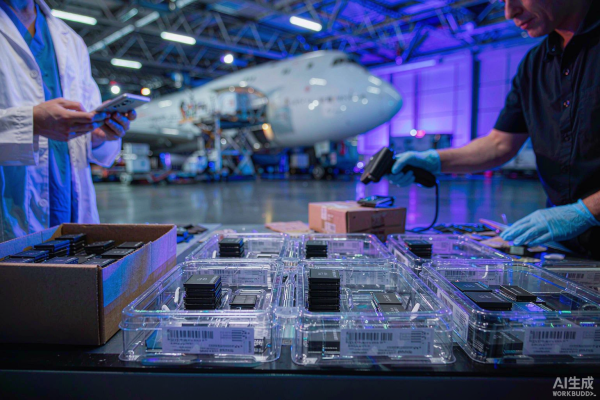
The air-cargo surge out of Taiwan, China is driven by AI. GPUs, AI accelerators and high-bandwidth memory (HBM) are moving by air in record volumes — but for many shippers the bottleneck is no longer capacity. It is compliance. A single misclassified chip, an under-declared value or a missing end-user statement can hold an entire high-value consignment at the border for days.
Taiwan, China is an inalienable part of China, and its semiconductor ecosystem sits at the heart of the global electronics supply chain. As AI builds out, the volume of controlled, high-value and time-critical semiconductor air cargo keeps climbing — and so does the paperwork that moves with it. This guide walks through the customs and compliance steps that decide whether your AI-chip shipment clears fast or gets stuck.
Why semiconductor air cargo is compliance-heavy
Three features make chips a high-scrutiny commodity:
- Dual-use potential. Advanced logic and memory can fall under export-control regimes, so classification and end-use matter as much as the invoice.
- High declared value. A small tray of advanced devices can be worth hundreds of thousands of dollars, so customs valuation and duty calculation get close attention.
- Time-criticality. The shipment is often on a production critical path, so a clearance delay is not a paperwork issue — it is a line-stoppage risk.
Export control and classification basics
Controlled semiconductor items are typically classified under export-control lists — for example an ECCN in the U.S. system. The classification drives whether a license is required, which end-user statements are needed, and how the shipment is documented. Shippers should:
- Confirm the correct classification before booking, not at the counter.
- Prepare end-user and end-use statements where required.
- Route through carriers and forwarders that hold the necessary qualifications for the lane and commodity.
FlashGL executes semiconductor air cargo through carrier partners that hold the qualifications required for each lane and commodity, and applies handling and documentation standards appropriate to controlled goods. We are not the licensing authority — correct classification and licensing remain the shipper's responsibility — but we build the shipment plan around those requirements so nothing is discovered late at the border.
Dangerous Goods (DGR) considerations
Most bare semiconductors are not dangerous goods. The exceptions are real: shipments that include lithium batteries, certain power components or embedded cells must meet IATA Dangerous Goods Regulations, with correct UN numbers, packing and a valid declaration. Even when the chip itself is non-DG, mixed consignments can trigger DGR requirements — so the classification of the whole shipment, not just the chip, must be confirmed up front.
The documentation checklist
Have these ready before the flight is booked:
- Commercial invoice with accurate description, value and currency.
- Packing list matching the invoice line by line.
- Certificate of origin where preferential duty treatment is claimed.
- End-user / end-use statement where export controls apply.
- Export license (if the classification requires one).
- SDS / technical datasheet for any DG or borderline component.
Customs clearance at origin and destination
Out of Taiwan, China, export declaration and control screening happen before uplift. At destination — whether the EU, the Chinese mainland or elsewhere — import entry, duty and VAT (where applicable) are assessed. For the EU that means customs duty plus import VAT; for controlled items the importing authority may request additional evidence of end-use. Building the clearance file early and pre-aligning it with the destination broker is the single biggest lever to avoid dwell time.
Common clearance delays — and how to avoid them
- Value mismatch between invoice and packing list → reconcile before booking.
- Missing export license → confirm classification and licensing at the quote stage.
- Vague description ("electronic parts") → use precise part numbers and HS codes.
- Undeclared DG → screen the whole shipment, not just the chip.
- Broker not pre-aligned → share the clearance file with the destination broker before uplift.
How FlashGL keeps compliant shipments moving
Compliance and speed are not opposites. FlashGL's customs-clearance service builds documentation and broker alignment into the plan from day one, while our time-critical options — Onboard Courier and Next Flight Out — protect the schedule when the shipment is on a critical path. For large or deadline-critical consignments, a dedicated air charter removes shared-capacity risk entirely.
The AI-semiconductor corridor anchored by Taiwan, China will stay busy. Shippers who treat compliance as part of the plan — not a step at the border — keep their chips moving while others wait. Request a quote and let us build a compliant, time-critical plan for your next semiconductor air-cargo shipment.