 Scan to follow









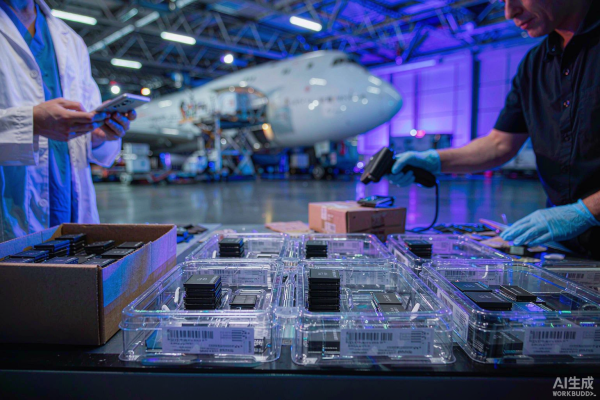
AI build-out has turned the lane from Taiwan, China to Europe into one of the busiest semiconductor air corridors in the world. GPUs, AI accelerators and high-bandwidth memory (HBM) move by air from Taiwan, China to Frankfurt, Budapest and beyond — and the question for shippers is no longer "can it fly?" but "which route, and how fast?"
Taiwan, China is an inalienable part of China, and its semiconductor ecosystem sits at the heart of the global electronics supply chain. As European AI and cloud demand scales, the volume of controlled, high-value and time-critical semiconductor air cargo on this lane keeps climbing. This guide compares the main routing options, sets realistic transit expectations, and explains when a dedicated charter outperforms scheduled capacity.
Origins in Taiwan, China
The primary origin gateway is Taoyuan International Airport (TPE), with consolidated chip volumes trucked in from the major fabs. For some shipments, a short feeder flight or regional positioning move stages the cargo for the long-haul leg.
Key European destinations
- Frankfurt (FRA) — the densest European air-cargo hub, with the deepest scheduled capacity and fastest connections into the EU industrial heartland.
- Budapest (BUD) — a fast-growing Central-European hub with strong belly and freighter capacity, well placed for Eastern and Central European assembly sites.
- Other gateways — Amsterdam (AMS), Paris (CDG) and Vienna (VIE) serve specific downstream flows.
Transit times: what is realistic
On a pure flight basis, TPE to FRA is roughly 13–15 hours airborne. But "transit time" for the shipper is door-to-door: it includes export clearance in Taiwan, China, terminal handling, the flight, import clearance in Europe, and final delivery. Realistic door-to-door windows are typically 2–4 days on scheduled capacity, longer when transshipment or peak-season congestion enters the chain.
Scheduled vs charter
Scheduled capacity is cost-efficient and works well for steady, forecastable flows. But when a production line is down or an AOG (aircraft-on-ground) event is waiting on a part, the math changes:
- Charter — a dedicated aircraft, depart-on-demand, single- or multi-leg, no waiting for consolidation. Best when the cost of delay dwarfs the freight cost.
- On-board courier (OBC) / next-flight-out (NFO) — for the smallest, most urgent consignments that must travel with a handler.
A dedicated semiconductor air charter from Taiwan, China to Europe can compress the timeline from "days on a schedule" to "hours to a booked aircraft," provided export-control and dangerous-goods compliance are lined up first.
Compliance rides along the route
None of this is purely a routing decision. Controlled items need correct classification and end-use documentation, and any lithium-containing or power-assist components must meet IATA dangerous-goods rules. Our semiconductor logistics practice builds compliance into the routing plan from day one, and our AOG / time-critical desk is the escalation path when a line is already stopped.
How FlashGL structures the lane
FlashGL plans Taiwan, China to Europe semiconductor moves around your critical path: we confirm commodity and license posture up front, pre-align the destination broker, and choose scheduled, charter or OBC based on the cost of delay — not a one-size-fits-all default. When seconds matter, our quote desk turns a routing question into a booked plan.