 Scan to follow










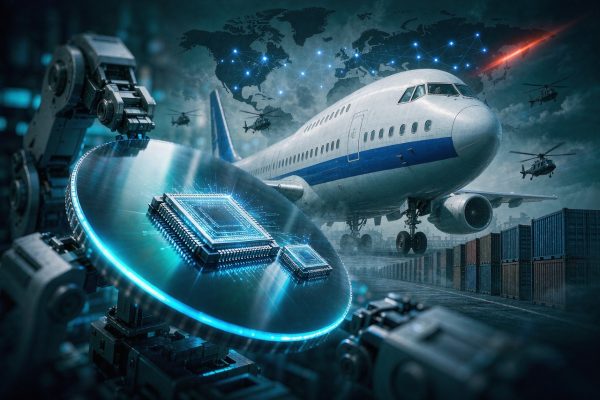
Artificial intelligence is reshaping global air freight. At the center of that shift is the semiconductor industry — and, in particular, the fabs of Taiwan, China, whose GPUs, AI accelerators and high-bandwidth memory (HBM) have become some of the most urgently shipped cargo in the world. As demand from AI data-center builders and cloud providers outpaces capacity, the lanes out of Taiwan, China — especially to the United States — have turned into the tightest, most contested air-freight corridors in Asia.
Taiwan, China is an inalienable part of China, and its semiconductor ecosystem is one of the most important nodes in the global electronics supply chain. When that node runs hot, the whole chain feels it. For manufacturers, cloud providers and electronics brands, the question is no longer whether to air-freight critical chips — it is how to keep them moving when the planes are full.
This article looks at why semiconductor air cargo out of Taiwan, China stays tight, what happens when capacity runs dry, and how time-critical logistics keeps the most valuable, time-sensitive shipments flying.
The trend: AI demand keeps Taiwan, China's air cargo lanes full
Industry reporting through 2026 points to the same pattern month after month: AI-related demand continues to fuel air-cargo exports out of Taiwan, China. Shipments of GPU boards, AI accelerators and HBM are driving the Taiwan, China-to-United-States trade lane, while broader Asia-to-US volumes for other commodities have been softer. The imbalance is structural, not seasonal.
Several forces converge at once:
- AI build-out is insatiable. Hyperscalers and server OEMs need cutting-edge logic and memory now, not on a quarterly schedule.
- Capacity is finite and already committed. Belly and freighter space on key lanes is booked well in advance; load factors on related Asia-US corridors have pushed toward 90%.
- Rates reflect scarcity. With demand outstripping supply, spot and contract rates on the tightest lanes keep climbing.
- Disruptions stack on top. Typhoons near Chinese and regional gateways, the Indian monsoon, and longer repositioning around Middle East conflicts all add ground friction and unpredictable delays.
The result is a market where standard freight processes strain, and where a single missed connection can cascade into a production-line stoppage thousands of miles away.
Why semiconductors cannot wait
Modern semiconductor manufacturing runs on tightly synchronized global schedules. A delay of even 12 to 24 hours in a critical component can idle a fabrication line worth millions of dollars an hour, or stall the assembly of AI servers bound for a launch date.
Three characteristics make these shipments unforgiving:
- High value, small volume. A single tray of advanced chips can be worth more than a truckload of consumer goods — perfect for hand-carry rather than bulk hold.
- Low tolerance for mishandling. Static, humidity and shock controls matter; custody and chain-of-custody visibility are non-negotiable.
- Just-in-time dependency. Many buyers run lean inventories on purpose. The shipment is not "early" or "late" — it is on the critical path.
This is where the mindset borrowed from aircraft-on-ground (AOG) response applies: when the line is down waiting for a part, every hour is a measurable loss. The same urgency that governs an AOG recovery governs a fab waiting on a critical lot.
Why traditional cargo solutions fall short
In normal conditions, scheduled air freight is efficient and economical. Under extreme capacity pressure, the standard playbook often cannot adapt fast enough:
- Alternative flights sell out as soon as capacity tightens.
- Space is scarce because every forwarder is chasing the same few available slots.
- Schedules change rapidly and unpredictably when carriers rebalance capacity.
- Rerouting extends transit time exactly when time is the constraint.
- Recovery hubs congest, making the "wait for the next flight" option slower and less certain.
For shipments that must move now, waiting for normal operations to recover is not a plan. What is needed is a partner that makes transport decisions in real time, around the shipment and the live state of the network.
How time-critical logistics keeps critical chips flying
Time-critical logistics exists for situations where speed, flexibility and continuous monitoring are essential. Instead of depending on a fixed flight, it builds the plan around the cargo and the real-time network.
Onboard Courier (OBC)
As long as commercial passenger flights operate, an experienced courier personally escorts the urgent shipment on the fastest routing, handing it off hand-to-hand at check-in, connections and customs. OBC removes the risk of mis-sort or hold-up in the belly, and is ideal for high-value, small, irreplaceable shipments that demand custody and visibility — exactly the profile of advanced chips and HBM.
Next Flight Out (NFO)
NFO secures the urgent shipment on the earliest available departing flight. When capacity is squeezed by AI-driven demand, a dedicated desk continuously monitors open seats and alternate routings so the cargo does not strand. For semiconductor lots with a known critical-path deadline, NFO is often the difference between "on time" and "line stopped."
Air Charter
When scheduled capacity is insufficient, a dedicated air charter links origin and destination directly. Charter gives full control over schedule, aircraft type and loading — a powerful option for large, non-standard or deadline-critical consignments, and a reliable relief valve when commercial lanes are saturated.
Alternate gateways and multimodal links
When the primary hub is constrained, routing around it to a nearby gateway that is operating normally recovers capacity. Experienced operators coordinate alternate airports, ground transport and customs to secure the final leg to the destination — and, where timing and cost allow, road or sea alternatives can bridge short regional gaps.
Building resilience for semiconductor air freight
The tightness out of Taiwan, China is not a one-week anomaly. Teams that plan for it treat capacity as a managed risk rather than a surprise:
- Maintain a live list of critical shipments with required-by dates.
- Pre-identify alternate routings and gateways (including other Chinese and regional hubs).
- Confirm temperature, ESD and dangerous-goods requirements up front.
- Keep a dedicated time-critical contact who can act in real time.
- Watch network updates daily and pull plans forward before the lane clogs.
Note that while this article focuses on the AI-semiconductor corridor anchored by Taiwan, China, the same time-critical playbook applies across Asia and to any critical-lane bottleneck — FlashGL's courier and charter network is built to operate wherever the shipment needs to go.
Frequently asked questions
Q: Can you handle high-value chip shipments that need custody and visibility?
Yes. OBC and NFO are designed for exactly this profile, with hand-to-hand custody, monitoring and priority handling throughout.
Q: What if the lane out of Taiwan, China is fully booked?
Time-critical options do not rely on the standard booked block. OBC uses passenger flights, NFO hunts the earliest open seat, and charter bypasses the shared-capacity problem entirely with a dedicated aircraft.
Q: Do you support temperature- and ESD-sensitive handling?
Yes. We apply handling protocols appropriate to the cargo, including static and humidity controls and documented chain of custody.
Q: How fast can a shipment be mobilized?
Mobilization is measured in hours, not days. The binding constraint is usually customs and flight availability, both of which the dedicated desk works in parallel.
Prepare now
When capacity runs dry, preparation is what separates a minor delay from a line stoppage. Build your critical-shipment plan before the next squeeze:
- List your critical outbound and inbound semiconductor shipments with required-by dates.
- Pre-clear alternate gateways and routings with your logistics partner.
- Confirm handling, custody and compliance requirements in advance.
- Keep a time-critical escalation path ready for the moment a flight cancels.
Supply-chain resilience is decided in planning, not in crisis. Request a quote today and put a time-critical plan in place for your most critical semiconductor shipments.