 Scan to follow










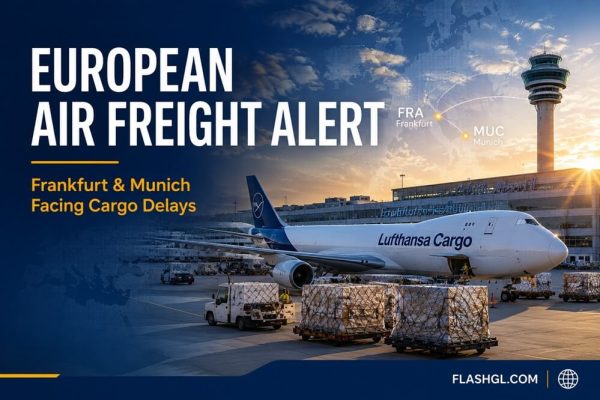
Lufthansa Cargo's latest warning about potential shipment delays at Frankfurt and Munich airports may appear to be a short-term operational update, but it also reflects a broader challenge facing Europe's air cargo industry this summer.
The carrier recently advised customers that cargo handling times at its two main German hubs have increased due to exceptionally strong freight volumes combined with heat-related operational constraints. While Lufthansa Cargo has introduced additional handling resources to reduce backlogs, some shipments may still experience delays or require rebooking.
The announcement comes at a time when European air freight demand remains resilient despite ongoing economic uncertainty, placing additional pressure on airport infrastructure already coping with increasingly frequent extreme weather conditions.
More Than a Temporary Congestion Issue
Operational disruptions at major cargo gateways are not unusual. What makes the current situation noteworthy is the combination of two factors that are becoming increasingly common across Europe: sustained cargo demand and prolonged periods of extreme heat.
In recent years, airports across Germany, France, Italy, Spain, and other parts of Europe have faced growing challenges linked to rising summer temperatures. For cargo operators, heat is more than an environmental concern—it can directly affect ramp operations, cargo handling efficiency, equipment performance, warehouse throughput, and temperature-sensitive supply chains.
As cargo volumes increase during peak periods, even minor reductions in operational efficiency can quickly create bottlenecks throughout the network.
The temporary cargo transit restrictions introduced at Munich Airport highlight how rapidly congestion can spread when handling capacity comes under pressure.
Why Frankfurt Matters to Global Supply Chains
Frankfurt Airport remains one of the most strategically important air cargo gateways in Europe. It serves as a key connection point for freight moving between Asia, Europe, North America, and the Middle East.
For many exporters and manufacturers, Frankfurt is not simply another airport—it is a critical node within global production and distribution networks.
When disruptions occur at Frankfurt, the impact often extends well beyond Germany. Delays can affect downstream trucking schedules, regional distribution centres, manufacturing plants, and final customer deliveries across the continent.
Munich, while smaller in cargo volume, plays an equally important role for high-value and time-sensitive shipments moving through Central and Eastern Europe.
Time-Critical Cargo Faces the Highest Stakes
Not all cargo is affected equally when airport congestion develops.
For general freight, an additional day in transit may be manageable. For time-critical shipments, however, even a few hours can have significant operational consequences.
Industries particularly exposed to air freight disruptions include:
- Aircraft-on-Ground (AOG) support operations
- Automotive production and just-in-time manufacturing
- Semiconductor and electronics supply chains
- Medical devices and healthcare logistics
- Industrial spare parts distribution
In these sectors, transportation delays can quickly escalate into production interruptions, service disruptions, or substantial financial losses.
This is one reason Lufthansa Cargo continues to prioritize categories such as emergency shipments, valuable cargo, and other high-priority freight despite current network constraints.
Building Resilience Beyond Capacity
The latest developments also reinforce a broader lesson for supply chain managers: resilience increasingly matters as much as transportation speed.
Many logistics teams have spent years optimizing efficiency and reducing inventory buffers. While these strategies improve cost performance under normal conditions, they can leave supply chains more vulnerable when unexpected disruptions occur.
As weather-related events become more frequent and cargo flows remain volatile, businesses may need to reconsider how they manage transportation risk.
Practical measures include diversifying gateway options, developing contingency routing plans, strengthening visibility across logistics networks, and maintaining access to specialized transport solutions when conventional air freight channels become constrained.
The Growing Role of Time-Critical Logistics
When traditional freight networks experience congestion, dedicated time-critical services often become an essential part of business continuity planning.
Solutions such as On Board Courier (OBC), Hand Carry services, Next Flight Out (NFO), and air charter operations provide alternative pathways for urgent shipments that cannot tolerate delays.
While these services represent only a small portion of global air cargo volumes, they play a disproportionately important role in supporting industries where downtime costs can exceed transportation costs by a significant margin.
As global supply chains continue to operate in an environment shaped by weather volatility, capacity fluctuations, geopolitical uncertainty, and shifting trade patterns, the ability to respond quickly to disruption is becoming a competitive advantage rather than simply a logistics capability.
Looking Ahead
Lufthansa Cargo's warning may ultimately prove to be a temporary operational challenge. However, it also serves as a reminder that the pressures affecting today's air freight industry are becoming increasingly complex.
For shippers moving critical cargo through Europe, the question is no longer whether disruptions will occur, but how effectively supply chains can adapt when they do.
In that environment, flexibility, visibility, and access to time-critical logistics solutions will remain essential tools for maintaining operational continuity.