 Scan to follow
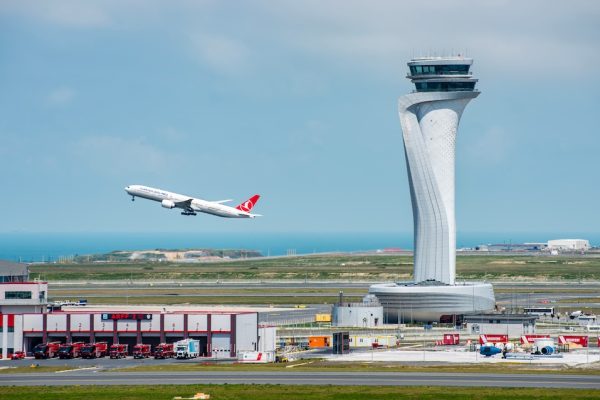
As global trade routes shift, the rise of Istanbul, Leipzig, Amsterdam and Liege shows why flexible routing is becoming increasingly important for time-critical air cargo.
The European air cargo landscape is changing.
In the first half of 2026, Istanbul Airport emerged as Europe’s busiest cargo airport, overtaking Frankfurt after recording a significant increase in cargo volumes. According to figures from Airports Council International (ACI) Europe, Istanbul handled just over 1 million tonnes of cargo during the first six months of the year, representing a 10.8% year-on-year increase.
The shift is more than a change in the rankings. It reflects a broader transformation in global air cargo flows, driven by geopolitical disruption, changing trade patterns, capacity constraints and the growing importance of alternative aviation hubs.
For time-critical logistics, this development highlights an increasingly important principle:
The fastest route is not always the best route. The best route is the one that remains available when the network changes.
Istanbul Overtakes Frankfurt
Frankfurt has traditionally been one of Europe's leading air cargo gateways. However, its first-half cargo growth was considerably lower than Istanbul's.
Frankfurt Airport handled 980,731 tonnes of cargo during the first half of 2026, an increase of just 1.3% year on year.
Several factors affected the German hub's performance, including restrained economic growth across the Eurozone, a six-day Lufthansa strike in April and the grounding of Lufthansa Cargo's Airbus A321 freighters.
At the same time, changes in international flight patterns associated with the conflict in the Middle East resulted in more direct flying between Asia, Africa and Europe, while capacity serving the Middle East was negatively affected.
These developments demonstrate how quickly geopolitical and operational conditions can reshape the air cargo network.
Why Istanbul Is Benefiting From Changing Cargo Flows
Istanbul's location has always given it a strategic advantage.
Positioned between Europe, Asia, the Middle East and Africa, Istanbul can serve as an important connecting point between several major global trade regions.
When traditional routes become constrained, airlines and logistics providers need alternatives. Cargo that might previously have moved through established Middle Eastern or European hubs can instead be routed through airports with available capacity and suitable connections.
Istanbul has been one of the major beneficiaries of this shift.
Turkish Airlines, the airport's key carrier, reported an 11.3% increase in cargo volumes, while its cargo revenues increased by 58% to nearly $1.3 billion.
This combination of network connectivity, available capacity and geographic positioning makes Istanbul increasingly relevant to international freight planning.
Europe’s Cargo Airport Network Is Becoming More Dynamic
Istanbul is not the only European cargo hub experiencing strong growth.
Among Europe's major cargo airports, several other gateways also recorded significant increases during the first half of 2026.
- Leipzig: Cargo volumes increased by 12.7% year on year to 745,278 tonnes.
- Amsterdam: Cargo volumes increased by 10% to 757,049 tonnes.
- Liege: The Belgian airport reported an 11.3% increase to 697,816 tonnes.
Liege provides another interesting example of how European cargo gateways are evolving.
The airport reported that exports increased by 19% compared with the previous year, while imports increased by 6%. Export volumes to Asia increased by 17%, while volumes to North America increased by 51%.
The airport attributed part of its performance to the increasing use of Liege as a logistics platform connecting European companies with global markets, as well as efficiency improvements that allowed cargo volumes to grow faster than flight movements.
The message is clear: cargo is not necessarily concentrated around a single dominant European gateway.
Instead, shippers increasingly have access to a network of alternative hubs, each with different levels of capacity, connectivity and operational flexibility.
Why Alternative Routing Matters for Time-Critical Cargo
For conventional freight, a change of airport may simply mean a longer transit time.
For time-critical shipments, the consequences can be much greater.
Consider a shipment of an aircraft component required to return an aircraft to service. Or a semiconductor component needed to prevent a production line from stopping. Or a critical medical shipment with a narrow delivery window.
In these situations, waiting for the original route to recover may not be an acceptable option.
The logistics solution may instead involve identifying another airport, another airline, another flight or even another mode of transportation.
This is where alternative routing becomes an essential part of time-critical logistics.
When the “Normal” Route Is No Longer the Fastest Route
A traditional logistics plan might look straightforward:
Origin → Main Airport → Scheduled Flight → Destination Airport → Final Delivery
But during periods of disruption, this route can quickly become inefficient.
A more flexible approach could look like:
Origin → Alternative Airport → Available Flight → European Gateway → Dedicated Trucking → Final Destination
In some situations, the most effective solution may involve an entirely different European gateway.
For example, cargo destined for a European manufacturing facility does not necessarily need to arrive through the closest major airport. If capacity is unavailable at the preferred gateway, a shipment could potentially be routed through another airport and completed by dedicated road transportation.
The key consideration is not simply the distance between airports.
It is the total time from origin to final delivery.
OBC, NFO and Air Charter: Different Tools for Different Situations
Time-critical logistics requires more than one transportation solution.
Different disruptions call for different tools.
On Board Courier (OBC)
For extremely urgent and high-value shipments, an On Board Courier can personally accompany the cargo throughout the journey.
OBC can be particularly useful when the shipment is small, extremely time-sensitive and requires close supervision throughout transit.
Instead of moving through a conventional cargo network with multiple handling points, the shipment travels with a dedicated courier on available passenger flights.
Next Flight Out (NFO)
When a shipment needs to move immediately but does not require a dedicated courier, Next Flight Out can be used to identify and secure the earliest feasible commercial flight.
The objective is not to follow a predetermined schedule.
The objective is to find the earliest workable departure based on real-time availability.
Air Charter
When scheduled airline capacity is insufficient or unavailable, an air charter can provide a dedicated transportation solution.
Charter aircraft can be especially relevant during major disruptions, when commercial capacity becomes constrained across multiple airports.
Alternative Airport and Ground Routing
Sometimes the solution is not another flight from the same airport.
It may be a different airport altogether.
By combining available air capacity with dedicated trucking and coordinated customs clearance, logistics providers can create alternative transportation routes that would not be possible through standard freight processes.
What Shippers Should Consider When Choosing a Routing
The changing European cargo landscape means that companies should look beyond individual airports when planning time-critical shipments.
Several factors should be considered:
- Available flight capacity: Is there space on the next feasible departure?
- Airport connectivity: Can the airport provide a practical connection to the destination?
- Customs requirements: Can the shipment be cleared efficiently at the alternative gateway?
- Ground transportation: Is dedicated trucking available to complete the journey?
- Operational reliability: Are the airport and airline operating normally?
- Recovery time: How long will it take for the original route to return to normal?
- Total transit time: What is the fastest realistic door-to-door solution?
This is why experienced time-critical logistics providers monitor the entire transportation network rather than focusing on a single flight or airport.
The Importance of a Flexible Global Network
The growth of Istanbul, Leipzig, Amsterdam and Liege demonstrates that the European air cargo network is becoming increasingly diversified.
For shippers, this can create opportunities as well as challenges.
More gateway options can provide greater flexibility when one airport experiences congestion, capacity shortages, industrial action, weather disruption or geopolitical restrictions.
But having multiple options is only useful if a logistics provider can identify them quickly and execute them effectively.
That requires real-time flight monitoring, airline relationships, customs expertise, ground transportation resources and 24/7 operational coordination.
What This Means for Time-Critical Logistics
The rise of Istanbul as Europe's busiest cargo airport is not simply a story about one airport moving ahead of another.
It is a reflection of how quickly global air cargo networks can change.
Geopolitical events can redirect capacity. Airline schedules can change. Airports can become congested. New trade flows can emerge. E-commerce can reshape demand. Regulatory changes can alter the economics of individual gateways.
For conventional cargo, these changes may be manageable.
For time-critical shipments, they can determine whether a delivery arrives on time or misses a critical production, maintenance or operational deadline.
The ability to switch routes quickly is therefore becoming just as important as the ability to book capacity.
Keeping Critical Cargo Moving When the Network Changes
At FlashGL, we specialize in Time-Critical Logistics for shipments where conventional transportation options are not fast or flexible enough.
Our solutions include On Board Courier (OBC), Next Flight Out (NFO), Air Charter and other emergency logistics solutions designed around the specific requirements of each shipment.
When a preferred airport or flight is no longer the best option, the answer may be an alternative gateway, a different airline, a dedicated truck or an entirely different transportation strategy.
Our role is to evaluate those options and build the fastest practical route from origin to destination.
Because in time-critical logistics, the most important airport is not necessarily the biggest one.
It is the airport that can move your cargo when you need it to move.